
Dolby Atmos has gone from a cinema format to something artists ask for by name. If you’ve heard a mix that seems to open up around you rather than sit in front of you, that’s the idea — sound placed in a three-dimensional space instead of just left to right.
What is Dolby Atmos, really?
A stereo mix lives on two speakers. An Atmos mix treats each element — a vocal, a guitar, a reverb tail — as an object that can be placed anywhere around the listener, including overhead. When someone plays it back on headphones, a soundbar or a full speaker array, Atmos folds that spatial mix down to suit whatever they’re listening on. The result is a record with more room to breathe.
How we do it at The Avenue
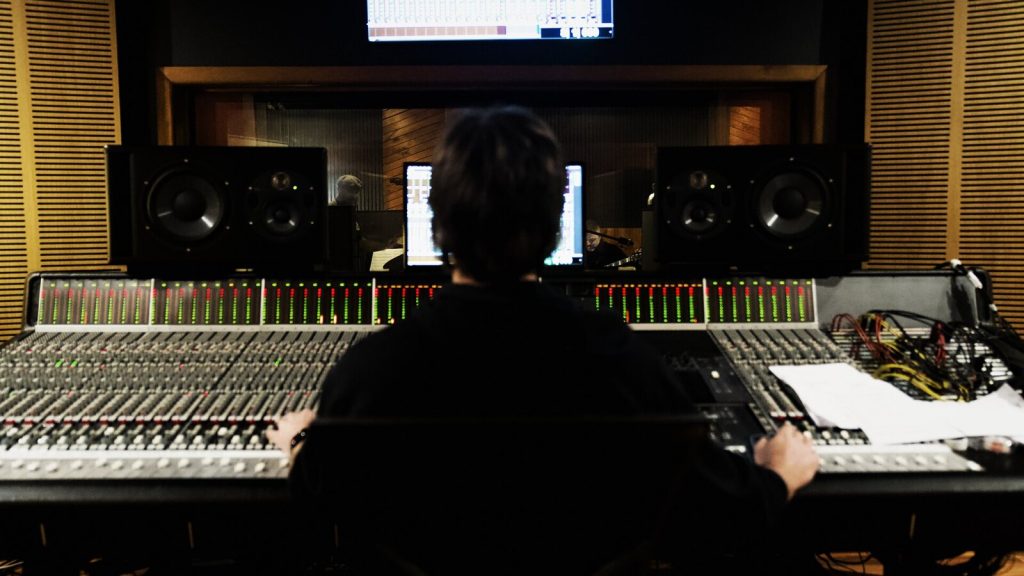
Studio B is our mix room, running a 7.1.4 Dolby Atmos setup alongside the deepest analog collection in the building — the EMT 140 plate, a wall of vintage compressors and EQ, and reverbs you won’t find in a plugin (the full Studio B rig is here). That hybrid approach matters: immersive doesn’t have to mean clinical. You can put a record in three dimensions and still have it feel warm.
When is it worth it?
Honestly, not every song needs an Atmos mix. A tight two-minute single might say everything it needs to in stereo. But a record with space in it — layered production, live rooms, big dynamics — can genuinely come alive in immersive, and the major streaming platforms now support it. Our mixing rates are published, and we’ll quote an immersive mix on the record in front of us.
If you’re curious whether your music suits it, the simplest thing is to come and hear the room — call Luke on 03 9967 8741, or tell us what you’re working on.